Welcome Inspire Pilots!
Join our free DJI Inspire community today!
Sign up

Amperage and Wattage needed for DJI Inspre II charger

Joined
May 27, 2021
Messages
10
Reaction score
0
Age
66
Hi all,

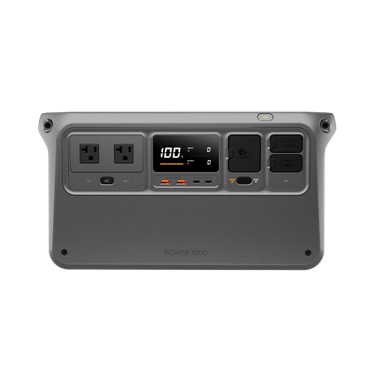
I'm thinking about purchasing the DJI Portable 1000 Power station to charge Inspire II batteries while on the job, in my car.

What is the amperage and wattage needed to run the standard four battery charger?

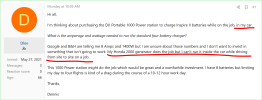
Google and B&H are telling me 8 Amps and 1400W but I am unsure about those numbers and I don't want to invest in something that isn't going to work. My Honda 2000 generator does the job but I can't run it inside the car while driving from site to site on a job.

This 1000 Power station might do the job which would be great and a worthwhile investment. I have 8 batteries but limiting my day to four flights is kind of a drag during the course of a 10-12 hour work day.

Thanks,

Dennis
 
Hi all,

I'm thinking about purchasing the DJI Portable 1000 Power station to charge Inspire II batteries while on the job, in my car.
To answer your question, we'll need to know more about the DJI Portable 1000 Power Station. A quick Google search nets that this is essentially a 1024Wh battery. Another Google search nets that the Inspire 1 uses a TB50 battery. The TB50 is a 4280mAh battery. Voltage is 22.8v (which doesn't really matter since you're using an AC charger). According to nomenclature, the TB50 provides 97.58 Wh of energy. So, essentially you can charge 10 batteries before your Power 1000 runs out of juice.


What is the amperage and wattage needed to run the standard four battery charger?
The great thing about 'standards" is that there are so many of them.

Generally speaking, in the DJI world 100 watts is considered a "standard charge," and 180 watts is considered a "quick charge." So does your "standard charger" (as you call it) source 100 watts or 180 watts? We would have to know this number to answer your question.

Also, does it charge batteries in series (one at a time) or parallel (many batteries at once)? Most "standard chargers" charge in series, but I have an Inspire 1 (TB47/48) charger that charges 6 batteries simultaneously (parallel). So that is the question that needs to be answered.


Google and B&H are telling me 8 Amps and 1400W but I am unsure about those numbers and I don't want to invest in something that isn't going to work.
Never trust Google for information. Trust Google to FIND information.


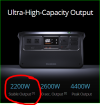
According to DJI (not Google), "stable output" is 2200 watts.
1755610570915.png

The footnote [1] indicates testing was done @ 77° Fahrenheit.

So you need to answer these questions:

1) How many batteries does your charger charge at once?
2) How many watts per battery?


My Honda 2000 generator does the job but I can't run it inside the car while driving from site to site on a job.

This 1000 Power station might do the job which would be great and a worthwhile investment. I have 8 batteries but limiting my day to four flights is kind of a drag during the course of a 10-12 hour work day.
Assuming 2 batteries per flight and roughly 10 charges from the Power 1000 (and no additional help from your generator), this will increase your day from 4 flights to 9 flights total.

The promo video boasts the ability to charge Mavic 3 and Inspire 3 batteries (TB51) directly, but makes no mention of Inspire 2 TB50 batteries. So you would have to use your charger via the AC port, which brings us full circle back to the questions I axed™ earlier.

D
 
Last edited:
The Power 1000 will have no problem charging your I2 batts. You'll need to use the AC plugs but you could easily have two power supplies plugged in with both coke can chargers going at the same time along with the remote or wb37 batts going too. No problem at all. And it really shines with a I3 and mavic 3- those special charge cables enable very fast charging. Impressively so. But sill useful and very capable to charge I2 gear as well.
 
  • Like
Reactions: Donnie Frank
The Power 1000 will have no problem charging your I2 batts. You'll need to use the AC plugs but you could easily have two power supplies plugged in with both coke can chargers going at the same time along with the remote or wb37 batts going too. No problem at all. And it really shines with a I3 and mavic 3- those special charge cables enable very fast charging. Impressively so. But sill useful and very capable to charge I2 gear as well.
Perfect, thank you ZCDC.
 
Perfect, thank you ZCDC.
"The Power 1000 will have no problem charging your I2 batts." is not an answer. There's no doubt it will charge one or two batteries at a time. The REAL question is HOW MANY batteries will it charge before the Power 1,000 itself needs to be recharged, which I answered for you. 10 batteries TOTAL. 5 more flights.

Doing some basic math, it can easily "quick charge" all 10 of those batteries at one time, but ONLY 10 batteries for the entire day, which is the information you REALLY need to know, yes??

You're welcome.

D
 
Donnie, your math seems good but you don't take into account that you can also charge at the same time. There are many combos but maybe the easiest is to have the car charger and a single solar panel going at the same time giving you a real world ~150W of input power while charging other stuff. This is what I do. If I'm going to be parked in one spot for over thirty mins I throw a panel on the roof. And then anytime we're moving I have the small car charger plugged in as well. It's relatively low wattage but it does add meaningful power to the bank. It's also simple and easy to manage, disconnect, move as needed, etc. It's also very cheap, so a no brianer if you invest in one of these power banks. They also have a very high wattage output that hard wires into the alternator/battery of the vehicle. Much more money and a relatively complex setup but it essentially allows unlimited charging if you are vehicle based. So it would be more than 10. :)
 
Donnie, your math seems good but you don't take into account that you can also charge at the same time.
I respectfully suggest you read the OP more carefully.
1756062304365.png

The OP suggests that he drives to multiple jobs per day, thereby negating the possibility of using his generator.
But it gets worse, as I addressed this exact issue already.
1756062423322.png

There are many combos but maybe the easiest is to have the car charger and a single solar panel going at the same time giving you a real world ~150W of input power while charging other stuff. This is what I do.
A solar panel on the roof of car would be a possible solution. I think a 180 watt panel would fit, but would require some creating mounting. If you're suggesting that he set up a panel AT the jobsite, I would remind you that he has a 2000 watt generator that deploys in seconds. So, unless the solar panel is actually mounted to the roof of his vehicle, and ergo, online and charging WHILE driving, I see no advantage.


If I'm going to be parked in one spot for over thirty mins I throw a panel on the roof.
What I gather from the OP is that he flies a job, then drives for an unspecified period of time (20 min? An hour??). Flies another job. Lather, rinse, repeat. So, in THIS case, a constant charge from a mounted solar panel would be a viable answer. Conversely, carrying one and deploying it on the ground would be less effective than his generator. Especially for evening jobs, early morning jobs, or jobs on cloudy days. I assume that the OP took all solar panel options into account already.


And then anytime we're moving I have the small car charger plugged in as well.
At 60 watts, sourcing the cigarette lighter (now called the power plug) will barely put a dent in the Power 1,000. It won't even put a dent in one of the TWO batteries necessary for flight. You're looking at 2-3 hours to charge one battery. Now, if you run a direct line off the car battery, that changes everything.

It's relatively low wattage but it does add meaningful power to the bank.
"Meaningful?" I disagree, sir.


It's also simple and easy to manage, disconnect, move as needed, etc.
Are you talking about the solar panel? Again, assuming conditions warrant a solar panel (no clouds, plenty of sunlight, no trees obstructing sunlight), I'm not so sure a 150 watt panel would be "easy to manage." Assuming the more expensive, more efficient Monocrystalline Silicon, that would be an 8 sq. ft. panel weighing about 20 lbs. This probably wouldn't fit in the trunk unless it were foldable. I don't know if I would consider such a beast "easy to manage." Honestly, it would be easier to pull the Honda Putt-Putt out of the trunk and fire that up. Just my opinion.


It's also very cheap, so a no brianer if you invest in one of these power banks.
As I stated already, the OP would get 5 additional flights out of the Power 1000 (9 flights total). Without knowing his needs, we don't know if 9 flights is enough.


They also have a very high wattage output that hard wires into the alternator/battery of the vehicle.

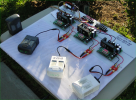
Yep. I built a charger for just such a purpose. I connect it directly to the car battery. It charges any battery I wish 3 at a time simultaneously. At the time of construction, I used it for P4P, Inspire 1 or Mavic Pro batteries, in any combination. But the voltage boosters are variable. So I can charge any battery I wish, provided I have the correct connector.
1756063497399.png


Much more money and a relatively complex setup but it essentially allows unlimited charging if you are vehicle based. So it would be more than 10. :)
Again, I respectfully disagree. A person who has time to set up a solar panel between jobs or at the jobsite ALSO has time to run the Putt-Putt, which is 2000 watts vs. 150 watts. Remember; the entire premise of the OP was that he did NOT have the ability to use the Putt-Putt because he was spending too much time in his car. So why would he be able to set up and use a solar panel?

The only way the solar panel becomes even remotely viable is if it is mounted to the vehicle and charging WHILE driving. But maybe I'm missing something. I invite your counter point.

D
 
Last edited:
Boy, a lot of discussion there Donny and ZCDC.

Here's what I do, I photograph big construction - bridges, wind and solar farms. The wind farms are where I use the drone the most as I travel from site to site pretty much all day long. As Donny points out, nine flights per day is a pretty great number depending on how long it takes the batteries to charge with this unit. I'm making a ballpark guess here but I think the 'DJI can' charges two batteries in about an hour-and-a-half from the 110V wall socket. If I can have a set on charge in the car while I'm doing ground work, driving, or flying, that's golden.

As it is with four sets of batts I really have to limit one set per site, which is often enough but sometimes you see something or the light changes and it would be great to send the I2 up again for more coverage.

Also if I can recharge during the day - at least some of the batteries - it's less I need to lug to the motel room every morning and night. I would just need to lug up the 1000W power source instead, lol. The bottom line is that more flights during the course of the day without buying more batteries would be fantastic.

I guess my question to both of you at this point is if it takes 1.5 hours to charge two batteries from the wall plug (the can only charges two batteries at a time even if four are loaded) how long might it take to charge the same two batteries from the 1000W battery unit? Longer or the same amount of time?

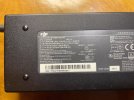
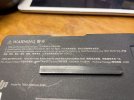
I'm going to post some pics of the battery and charger specs and hopefully you guys can explain to me how I convert those numbers to understanding what the 1000W battery pack will give me.

ZCDC, I looked into inverters for the car and not only are they very expensive but rigging them for interior operation is a real PIA. Like the generator they are a good option but too complicated.

Thanks guys, I'm enjoying this discussion. I need to get back to work editing now. Cheers, d

IMG_0530©DennisLee2025.jpg

IMG_0537©DennisLee2025.jpg
 
Boy, a lot of discussion there Donny and ZCDC.
I know, right? Always interesting in the forum, I must say.


Here's what I do, I photograph big construction - bridges, wind and solar farms. The wind farms are where I use the drone the most as I travel from site to site pretty much all day long. As Donny points out, nine flights per day is a pretty great number depending on how long it takes the batteries to charge with this unit. I'm making a ballpark guess here but I think the 'DJI can' charges two batteries in about an hour-and-a-half from the 110V wall socket. If I can have a set on charge in the car while I'm doing ground work, driving, or flying, that's golden.
Good information to have. This negates the portable solar panel idea.


As it is with four sets of batts I really have to limit one set per site, which is often enough but sometimes you see something or the light changes and it would be great to send the I2 up again for more coverage.

Also if I can recharge during the day - at least some of the batteries - it's less I need to lug to the motel room every morning and night. I would just need to lug up the 1000W power source instead, lol. The bottom line is that more flights during the course of the day without buying more batteries would be fantastic.
Then it sounds like the Power 1,000 is a possible solution. There are other chargers out there with even more power, like the Patriot Power Generator 2500X. @ 2500 watt hours, it gives you more than double the power of the Power 1000.

Remember, these "Power Generators" are nothing more than glorified batteries with different feature sets. So in your case, bigger is better. The Patriot weighs 65 lbs. So it may be too big for it to be practical for you. BUT...if you NEED more than 9 flights per day, then you will need more portable power. Or, as I eluded to, a bigger battery. The fact that DJI manufactures the Power 1000 nets zero advantage over the Patriot 2500X. For your purposes, they're both just large batteries.


I guess my question to both of you at this point is if it takes 1.5 hours to charge two batteries from the wall plug (the can only charges two batteries at a time even if four are loaded) how long might it take to charge the same two batteries from the 1000W battery unit? Longer or the same amount of time?
Exactly the same amount of time. And for what it's worth, you could run a half dozen DJI chargers simultaneously off the Power 1000 or the Patriot 2500X.


I'm going to post some pics of the battery and charger specs and hopefully you guys can explain to me how I convert those numbers to understanding what the 1000W battery pack will give me.
I think you are overly focused on source current (Amps / Watts), and missing the real point of your conundrum, which is capacity (Amp Hours / Watt Hours). A "watt hour" is how much energy the battery holds. A watt or amp is how QUICKLY it can be filled.

Think of the Power 1000 as a container and your DJI batteries smaller containers. Using water as an analogy, think of the Power 1000 as a one gallon jug, and your batteries as little pint containers. All you need to know is how many smaller containers you can refill with the large container. As I stated earlier, you can basically "fill" 10 DJI batteries with the Power 1000. The Power 1000 sources enough current that you can run a half dozen chargers simultaneously. So source current is NOT your problem. CAPACITY is.


ZCDC, I looked into inverters for the car and not only are they very expensive but rigging them for interior operation is a real PIA. Like the generator they are a good option but too complicated.
Not to mention that inverters waste electricity through heat via the conversion processes. Your car is a DC device. Your DJI batteries and drone are DC devices. Your charger is an AC device. So a car inverter would waste energy converting DC to AC. And then your charger wastes more energy converting AC to DC (this is why your charger gets warm...the conversion process is wasted heat, which is wasted energy). This is why I built my own DC -> DC charger. NO conversion process to waste energy. WAY less heat. MUCH more efficient. But I'm sure you don't want to build your own DC charger. So this takes us full circle back to using a portable battery like the Power 1000 or Patriot 2500X.

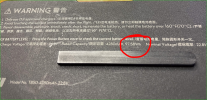
The circled number is the number you need to be concerned with.

1756099967078.png

97.58 Watt-Hours is capacity. Your DJI Power 1000 is 1,000 Watt Hours (capacity). Simple math. You can charge 10 drone batteries with the Power 1000. With the Patriot 2500x you can charge 25 batteries.

So the questions are:

1) What are your needs?
2) How much weight do you want to carry to and from your car?
3) How much weight do you want to carry around in your your car?

If you need enough power for 9 flights per day, then the Power 1000 is your solution. If you need more like 16 flights per day, then the Patriot 2500X is your solution. The assumes you start the day with 8 charged batteries. The caveat, of course, is that the latter weighs more.


Thanks guys, I'm enjoying this discussion.
Me, too. I hope this discussion has helped you gain an understanding of what you need. You have basically been asking the wrong question. The Power 1000 and Patriot 2500X source more than enough current to charge your batteries without overloading either unit. The question you NEED to ask is HOW MANY batteries can these "generators" charge before running out of energy themselves, which I have answered for you.

D
 
Thanks Donny, I don't think I've been asking the wrong question though, I understand the wattage value and appreciate your example. The problem I have experienced though is the power source, although having ample wattage't many of the units I've tried don not have the 'power' (amperage) to actually drive the charger and charge the batteries. I have a small 350W inverter in my car and tried to charge two batteries on my six hour drive home from a job yesterday. Checked the charges when I got home (and the charger was running during the entire trip) and nothing... absolutely no increase in the power supply as when I finished the flight. I'm actually a little concerned now that I may have damaged the batteries...

Anyway, the point is that I've tried many chargers that have the wattage but not the power to drive this charger. I know my 2000W generator works, but not sure a 1000W one would.

DJI's return policy says that the unit must be unused to return it... Just can't decide if I want to take that gamble or not which is why I started this thread on amperage.

The charging of ten batteries is kind of a mute point as I will never be in the field long enough for that to happen. The DJI charging 'can' only charges two batteries at a time and in an AC wall outlet that takes about 2.5 hours depending on battery depletion. Yes I could get another 'can' and charge four at a time but there just aren't enough hours in the day realistically to charge many more. I don't necessarily fly first thing in the morning each day. One or two sets of extras during the course of the day would probably be plenty. Often I don't even use all four sets that I have - conversely I often don't use all four sets because I am afraid something good might come up that I need another set for, lol.

So yeah it's a conundrum, spend $500+ for a charger, take up more space in the car, have to drag it up to the room every night to charge it... I don't know, only flew two sets each of the four days I worked this week. It's a tough call and the sale ends at the end of the month. I'd love to be able to test one before I bought it...

Thanks again for your insights.

d
 
I'm kinda wondering at this moment if the 500W unit might be enough. Wattage should be plenty but DJI gives no listings for power output. All DJI says is: 1000W Genuine Stable High-Capacity Power Output. That doesn't tell me much. Which again, is why I wonder about amperage.

Looking at SPECs on B&H site It's saying the 500 has 1000W output, the 1000W unit has 2200W of stable output power... I'm just not sure what this means. They are talking about output when as you say and I understand, is that Wattage is volume not power.

As I understand it the charger for the DJI want's at least 2.5 amps to operate, this doesn't seem like a lot, but again, I've hit a wall with this before.

Very confusing to me.


Last edited:
Thanks Donny, I don't think I've been asking the wrong question though, I understand the wattage value and appreciate your example. The problem I have experienced though is the power source, although having ample wattage't many of the units I've tried don not have the 'power' (amperage) to actually drive the charger and charge the batteries. I have a small 350W inverter in my car and tried to charge two batteries on my six hour drive home from a job yesterday. Checked the charges when I got home (and the charger was running during the entire trip) and nothing... absolutely no increase in the power supply as when I finished the flight. I'm actually a little concerned now that I may have damaged the batteries...

The odds of your batteries being damaged is very slim. Again with the math... Generally speaking, Quick Charging DJI batteries require 180 watts. This is regardless of voltage. The beauty of using Watts instead of Amperage is that the math translates across voltages. Using nice, even numbers, here's an example.

A 20 VDC battery pulling 180 Watts = 9 Amps (180/20=9).
A 90 VDC battery pulling 180 Watts = 2 Amps (180/90=2).

So when you start doing electrical math Amps can be a little complicated because you have to factor in Voltage. Not true with Watts which are constant. Why is this important?

Because you're pulling 180 watts @ the secondary side (DC Voltage to the batteries) then you're pulling 180 watts from the PRIMARY side (AC Voltage at the wall socket).

So let's look at your battery charger:
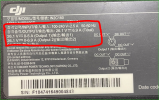
1756491924232.png

As you can see, at the AC side we're pulling 2.5 Amps. So for 120 Volts that would be 300 Watts (120x2.5=300). So if your car charger is rated @ 350 watts, this means you can only run ONE of your chargers. Did you run one or both of them?

Furthermore, I think if you look closely and read your converter's nomenclature, it will have a "continuous rating" and a "peak rating." Dollars to doughnuts, 350 Watts is peak. And dollars to doughnuts it's "continuous" rating is below 300 watts. If I'm wrong, then I would explore the possibility that your converter is malfunctioning OR lying to you. Chinese offerings almost ALWAYS fudge their specifications.

Remember; your charger is rated for as little as 100 volts. But if it's pulling more current than your inverter is able to supply, you may suffer a brown-out situation where your inverter's supply voltage drops below 100 volts. In this case, your charger would either stop charging OR might malfunction. So, in your case, I would be more concerned about the charger and not the batteries. It's easy enough to test. Does everything go back to working normally when plugged into a wall socket? I would guess YES.


Anyway, the point is that I've tried many chargers (You mean "inverters?") that have the wattage but not the power to drive this charger. I know my 2000W generator works, but not sure a 1000W one would.
Your charger requires 300 watts of power at the wall socket. Your inverter is rated @ 350 watts. Instinctively, you might think that you're in the black. But knowing what I know about inverters and Chinese products in general, I HIGHLY question that rating.

Conversely, the 1,000 watt power supply will source more than enough current for your chargers.


DJI's return policy says that the unit must be unused to return it... Just can't decide if I want to take that gamble or not which is why I started this thread on amperage.
Is there a reason you're stuck on the DJI offerings? Remember, the DJI charger can DIRECTLY charge batteries that are not yours. So the DJI power supply has no advantage over other, cheaper, more powerful offerings.


The charging of ten batteries is kind of a mute [sic] point as I will never be in the field long enough for that to happen.
Copy that.


The DJI charging 'can' only charges two batteries at a time and in an AC wall outlet that takes about 2.5 hours depending on battery depletion.
Then it will take the same 2.5 hours via any power supply you use. Remember this; Either the DJI battery charger will work or it won't. Either there's enough voltage and current supplied to it or there isn't. It won't halfway work because of low voltage or amperage. You either have enough voltage and amperage or you don't. I question your car's inverter. Conversely, the DJI offering or Patriot offerings I suggested earlier WILL have enough of both.


Yes I could get another 'can' and charge four at a time but there just aren't enough hours in the day realistically to charge many more. I don't necessarily fly first thing in the morning each day. One or two sets of extras during the course of the day would probably be plenty.
Touché. The 1,000 watt power supply (rated at 1024 Watt/Hours if memory serves) will be enough for 10 batteries, which appears to be more than you need.


Often I don't even use all four sets that I have - conversely I often don't use all four sets because I am afraid something good might come up that I need another set for, lol.
Makes sense.


So yeah it's a conundrum, spend $500+ for a charger, take up more space in the car, have to drag it up to the room every night to charge it... I don't know, only flew two sets each of the four days I worked this week. It's a tough call and the sale ends at the end of the month. I'd love to be able to test one before I bought it...
The irony is that you have a nice, big, fat 1000 watt/hour battery (depending on brand, type, size, etc.) sitting right there under the hood of your car. A properly-rated boost converter run directly off your car battery would allow you to bypass the inverter AND the DJI charger altogether. It would be nice if DJI made one of those, but they don't.
1756493946918.png


Thanks again for your insights.

d
Hue Betchee. In a word, the DJI Power 1000 should work for your needs, albeit, inconvenient to haul around and charge at the end of the day.

D

 
Last edited:
  • Like
Reactions: Dlee
Thanks again Donny. I took a quick look for other options and at the moment the DJI is a **** good price with the sale going on... too bad it ends tomorrow, not sure I'm ready to pull the trigger on this. It's one of those things where the value is not necessarily great... but would offer some convenience... at $500. Ha!

I'm mulling over the amperage need as you're explained it (thank you). I believe I understand your point about the wattage now.

I'm going to take the meter to the little inverter in the car and see what comes up just for better understanding of why it didn't charge along with checking the fine print. Yes, I was only using one charger with two batteries in it.

I'll let you know what I find out. If you have any good ideas per other portable power units I'm all ears.

Thanks again Donny.
 
Thanks again Donny.
You're very welcome.


I took a quick look for other options and at the moment the DJI is a **** good price with the sale going on... too bad it ends tomorrow, not sure I'm ready to pull the trigger on this. It's one of those things where the value is not necessarily great... but would offer some convenience... at $500. Ha!
Decisions, decisions. We've all been there.


I'm mulling over the amperage need as you're explained it (thank you). I believe I understand your point about the wattage now.
Good deal.


I'm going to take the meter to the little inverter in the car and see what comes up just for better understanding of why it didn't charge along with checking the fine print. Yes, I was only using one charger with two batteries in it.
Well, to be clear, voltage drop would occur *under load.* So, what you should do is meter the inverted without a load just to make sure that it's not malfunctioning from the get go. Then plug in your charger with the flat batteries inserted, wait 30 seconds or so and then meter the other AC plug on the inverter (I assume there is more than one plug). You will likely see a drop in voltage, but the drop should be nominal. Keep the meter on the inverter and keep an eye on it or come back and check it every few minutes. The AC voltage SHOULD settle to an acceptable level (110ish). Any lower than that and I would be concerned. Any lower than 100 volts is clearly a deal breaker.


I'll let you know what I find out.
Please do.


If you have any good ideas per other portable power units I'm all ears.
There are a lot of them on the market, none of which I own. So I would utilize YouTube for user reviews. I like the "my experience 1 year later" reviews. I can't stand "unboxings," which are all but worthless.

The numbers you should pay attention to:

Current it can source; Amps / Watts
Total capacity; Amp hours / Watt hours

With both, more is better.

Good luck!

D
 
Hey Donnie, thanks for all the great info throughout this thread. In the end I decided that flying the drone more than four times in a day is in reality a pretty rare occurrence for my typical work day. If I do fly more than four times and it's still early enough I can always swing by the office and just plug in the charger. Anyway, spending $500 didn't seem essential at the moment and having one more thing (and probably not a light thing) to drag back and forth to the car just didn't seem essential right now. Who knows, maybe down the road, but for now I think I'm good as it.

Anyway, I wanted to close this thread out and thank you for you knowledgeable comments.

Cheers,

d
 
Hey Donnie, thanks for all the great info throughout this thread. In the end I decided that flying the drone more than four times in a day is in reality a pretty rare occurrence for my typical work day. If I do fly more than four times and it's still early enough I can always swing by the office and just plug in the charger. Anyway, spending $500 didn't seem essential at the moment and having one more thing (and probably not a light thing) to drag back and forth to the car just didn't seem essential right now. Who knows, maybe down the road, but for now I think I'm good as it.

Anyway, I wanted to close this thread out and thank you for you knowledgeable comments.

Cheers,

d
My pleasure.

D
 
Thank you Sam. That is exactly the question I needed answered, Cheers! d
 

Members online

No members online now.

Forum statistics

Threads
22,522
Messages
210,789
Members
39,088
Latest member
logitech